

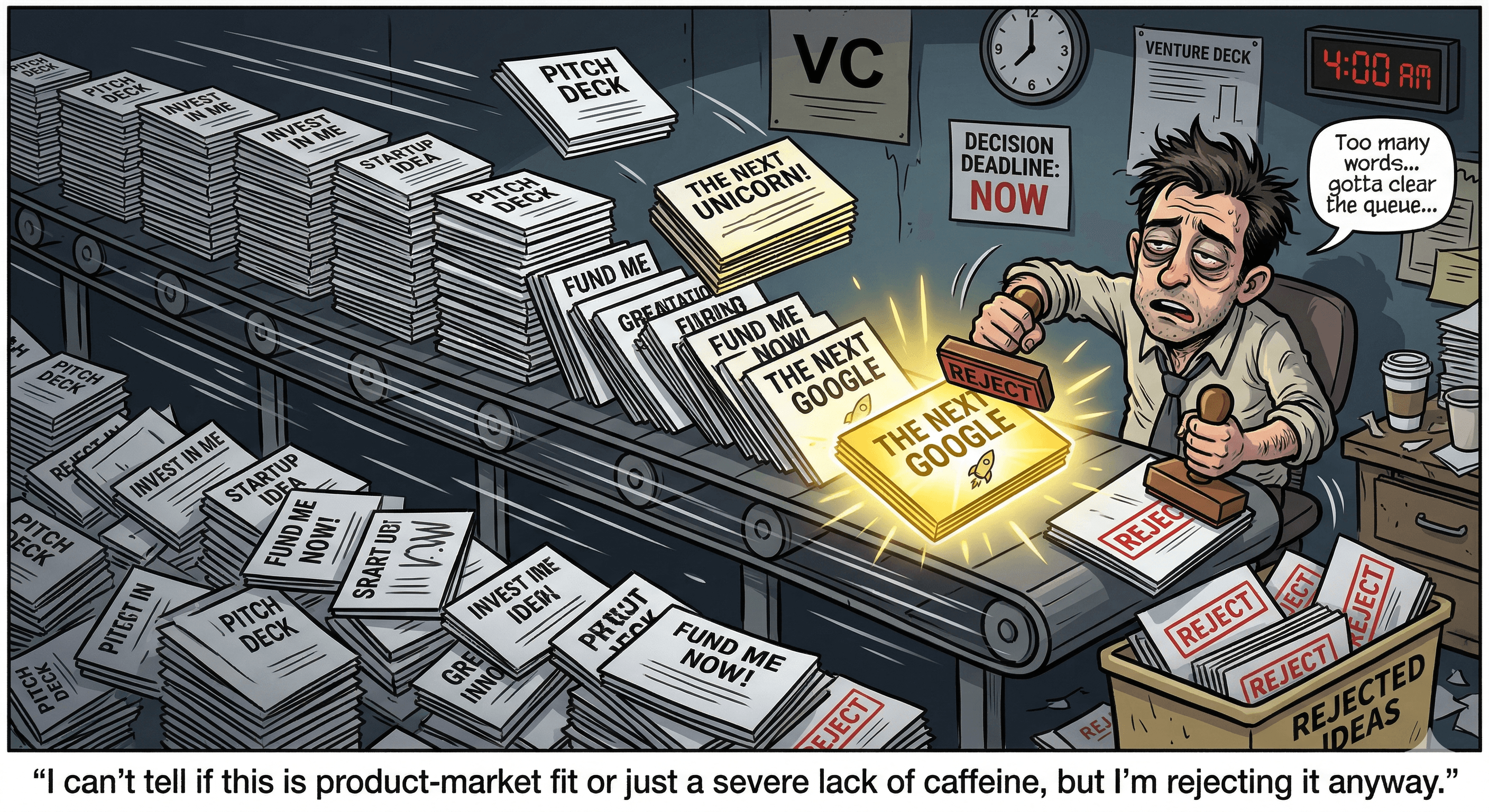
Picture this: It’s late afternoon on a Tuesday during a busy month of review. Your team member has already looked through forty-seven presentations. There are still 150 more to go before Friday. This workload doesn’t just test speed; it pushes patience and focus to the limit. With so many presentations, exhaustion sets in and careful analysis suffers.
On average, each presentation gets less than four minutes of attention. In that moment, people aren’t thinking deeply. They scan for familiar names, schools, or trendy phrases. But here’s the problem: the best opportunities often don’t look like what’s already popular.
The Cost of Saying "No" Too Quickly
When people are tired, they start looking for reasons to say “no” instead of “yes.” A minor mistake, a topic that takes longer to explain, or a founder who doesn’t seem like the usual candidate becomes an easy excuse to dismiss. The “Archive” button is pressed not because the idea isn’t good, but because the reviewer is simply worn out.
This is where promising companies get lost - the ones you later wish you’d invested in. They aren’t overlooked for lack of quality, but because your team was exhausted.
A Different Approach
At stotio, we believe the first review shouldn’t be a test of endurance. CohortIQ was created to help teams avoid tired mistakes. By letting computers score each presentation in a clear and consistent way, we make sure the most understandable ideas get noticed. Computers don’t get tired, so when your team finally opens a file, they’re looking at a real opportunity - not just another pile to sort through.
The Takeaway
If your review process depends on tired people, you’re not really selecting the best - you’re relying on chance. It’s time to move from quick glances to careful, data-based choices. Know more about stotio Cohort IQ