
The Death of "Gut Feel": Standardising the "Un-standardisable" in Your Investment Committee

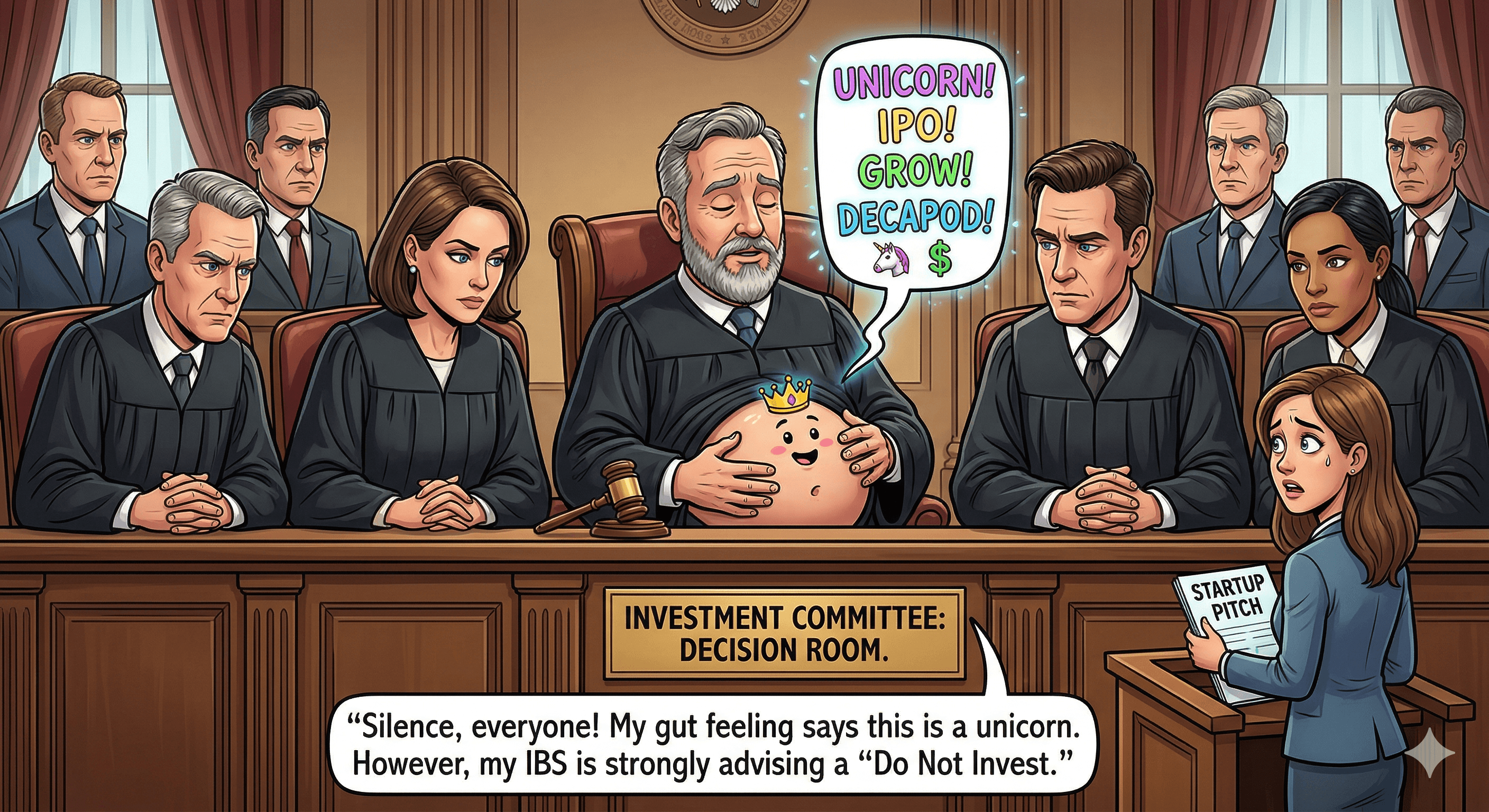
The infamous "Selection Day Stalemate" is a familiar scene in venture capital and accelerator investment committees. One partner is absolutely convinced about a founder’s potential based solely on the charisma and passion observed during a 20-minute Zoom pitch. Meanwhile, another partner, wary of the founder’s go-to-market (GTM) strategy, feels the proposal lacks depth and substance. Without a common and objective framework for evaluation, such discussions quickly spiral into a clash of personal impressions and subjective biases, leading to indecision or, worse, missed opportunities.
Traditionally, this reliance on personal judgement has been justified as "Investor Intuition" or "Gut Feel." However, as other industries and functions have embraced rigorous, data-driven decision-making, it begs the question: why should the critical process of cohort selection in venture funding still hinge on how someone "felt" about a story? This subjectivity not only introduces inconsistency but also increases the risk of overlooking promising founders who may not immediately resonate on a personal level but possess strong underlying business logic.
Narrative as a Data Point
The art of storytelling is often dismissed as intangible or "soft." In reality, especially at the early stage, it is one of the most critical data points available to investors. A founder’s narrative is a window into their strategic thinking and clarity. If a founder is unable to logically connect a pressing problem to a scalable solution, it is not merely a failure in presentation; it is often a symptom of incomplete business reasoning. Thus, narrative clarity becomes a direct proxy for a founder’s grasp of the market, the problem, and their own business’s viability.
How CohortIQ Solves IC Friction
CohortIQ aims to transform the often ambiguous, qualitative aspects of founder pitches into objective, quantitative benchmarks. By systematically scoring each pitch across 12 critical logic nodes, CohortIQ provides a structured assessment that removes much of the ambiguity from the process. For instance:
Logical Cohesion: Does the proposed solution directly address and resolve the identified problem? This ensures that founders are not simply offering a product, but are strategically targeting a genuine market pain point.
Strategic Emphasis: Is the founder prioritising the right growth levers for their specific stage of development? This assesses whether they understand what truly matters at their current level of maturity, rather than getting distracted by irrelevant metrics.
Narrative Velocity: How efficiently does the founder’s story progress from sparking initial interest to instilling conviction in the listener? A compelling narrative should quickly move the committee from curiosity to genuine belief in the founder’s vision.
With CohortIQ’s scoring system, investment committee meetings are no longer dominated by debates over vague impressions or "vibes." Instead, partners are equipped to discuss tangible data: for example, "This founder’s narrative clarity ranks in the top 2% of our applicant pool," shifting the conversation from opinions to evidence. This streamlines decision-making and also ensures that promising founders are evaluated on the strength of their logic and vision, rather than subjective preferences.
Know more about stotio Cohort IQ.